Showing posts with label Caldecott Medal Monday. Show all posts

Monday, October 31, 2011

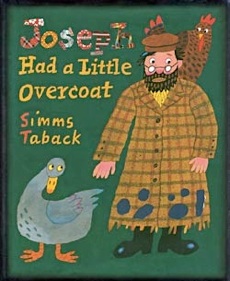
Caldecott Medal Monday, 2000: Joseph Had A Little Overcoat


Simms Taback won the 2000 Caldecott Medal for Joseph Had A Little Overcoat, a charming story based on the Yiddish folk song I Had A Little Overcoat.  Style and techniques featured include watercolor, gouache, pencil, ink, and collage. The affect is eye-catching, colorful, bold, but not overdone. Children will never tire of Taback's artwork, and the story itself is simple to read, with just one sentence gracing most pages. One part, "Joseph had a little _____. It was old and worn" repeats throughout the book, allowing pre-readers to join in.


The main character, Joseph, a Jewish farmer, owned an old, worn overcoat. Each time it became too worn, he used its fabric to make something else--something smaller. Holes in the illustrations (die-cut technique) peek through and give children a hint of what garment Joseph made next. 


With each successive reading of this gem, we're newly charmed. I check it out several times yearly, and we continue to find surprises in the illustrations.


I highly recommend Taback's entire body of literary & illustrated works for pre-readers and new readers. The use of folk songs, rhymes, and repetition is perfect for these children. What a pleasure, a gift, and a help his body of work is to children, parents, and teachers!


Visit teaching background and ideas for Joseph Had a Little Overcoat.

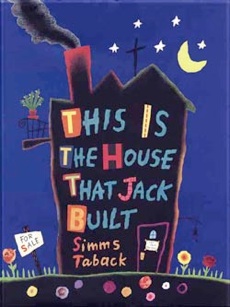
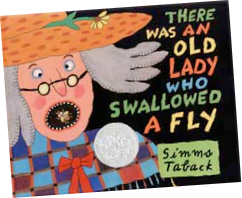
Simms Taback also won a 1998 Caldecott Honor Medal for I Know An Old Lady Who Swallowed a Fly


Visit his official site for a complete list of his works, for information about his artwork, his life, and for videos and interviews.


More works:
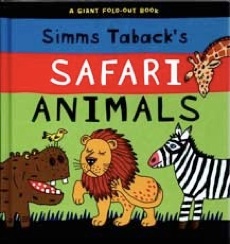


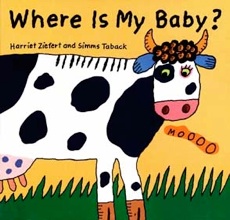
These book jackets and more can be found on Taback's website.

Monday, October 24, 2011

Caldecott Medal Monday, 1968: Drummer Hoff


Drummer Hoff, Adapted by Barbara Emberley, Illustrations by Ed Emberley

A chicken in the oven and sweet potatoes needing peeling means this will be a fast one, literary friends. But not devoid of fun, by any means!

Ed Emberley won the 1968 Caldecott Medal for the illustrations in Drummer Hoff--Barbara Emberley's adaption of a cumulative folk song featuring seven soldiers building a fancy cannon. The illustrations are bold and colorful and very unique. This artist would never be featured on my walls, but I can surely appreciate his work in a picture book.

The folk song itself is entertaining and fun and useful. Grab lots of repetitive rhyming books if you have babies, preschoolers or early readers in your home. These books help students learn to rhyme--a crucial pre-reading, auditory-discrimination skill that's more mysterious than we parents think. I've had many children over the years ask me if bat and ball rhyme--maybe not this exact example, but this general misconception, that rhyme refers to things that go together, not things that sound the same at the end.

Learning rhyme is as easy as hearing tons of rhyming books and nursery rhymes. It isn't something you actually teach; you expose them to it consistently during early-childhood years, and they get it--usually by early to late kindergarten, depending on how much exposure they've had. I taught in a low-income neighborhood, and it was never a given that my first graders would have this mastered. Poverty means, sometimes, no car to get to the library, and no value placed on books as a family experience.

Cumulative (Drummer Hoff), repetitive (The Little Red Hen, The Gingerbread Man), and rhyming books also help motivate preschoolers and early readers. Language learning should never be a chore. It should be a loving, fun-filled part of every childhood.

Your kids will recite Drummer Hoff for days after a reading, and you'll never tire of it. It will just make you smile.

Since it's a folk song that's been generating for years, I can type it for you here.

Drummer Hoff fired it off.


Private Parriage brought the carriage, 
but Drummer Hoff fired it off.


Corporal Farrell brought the barrel.
but Drummer Hoff fired it off.

And on and on until it looks like this at the end:

General Border 
gave the order,
Major Scott
brought the shot,
Captain Bammer
brought the rammer,
Sergeant Chowder
brought the powder,
Corporal Farrell
brought the barrel,
Private Parriage
brought the carriage,
but Drummer Hoff fired it off.


Hint for you homeschoolers: There are great sound-family spelling lessons hidden in here for older students.


Go away, big green monster! [Book]

We also have this Ed Emberely book, Go Away Big Green Monster, (teaches colors) which my kids all love. As you turn each page, more and more of a silly monster is revealed. Then, as you keep turning them, all his features go away, one by one. Great fun!


Glad Monster, Sad Monster [Book]

I haven't seen this one yet, but I'm sure it's silly-nilly good!

Thursday, October 20, 2011

Caldecott Medal Mania, 1980: Ox-Cart Man


Fall is the perfect season for introducing Ox-Cart Man, (1130 Lexile) written in 1979 by Donald Hall. The exquisite pictures were done by Barbara Cooney, for which she won a Caldecott in 1980.

In October he backed his ox into his cart and he and his family filled it up with everything they made or grew all year long that was left over.

This sentence graces the first page of a beautiful, lyrical glimpse back at 19th century New England farm life. We read how the ox-cart man and his family lived entirely off their land, selling their products every October in a marketplace located a ten-days walk away.

Fall finds the ox-cart filled up with wool from their sheep, mother's handmade shawl, mittens knitted by a daughter, linen they wove, birch brooms a son carved, maple syrup tapped from their trees, candles, shingles, potatoes from their garden, a barrel of apples, honey and honeycombs, turnips and cabbages, and a bag of goose feathers from the barnyard geese.

When his cart was full, he waved good-bye to his wife, his daughter, his son, and he walked at his ox's head ten days over hills, through valleys, by streams, past farms and villages until he came to Portsmouth and Portsmouth Market.

After he sells all his goods, including the wooden box he carried the maple syrup in, the barrel he carried the apples in, the bag he carried the potatoes in, along with his ox cart, his ox, and his yoke and harness, he buys some items for the family--an iron kettle, an embroidery needle, a Barlow knife for carving, and two pounds of wintergreen peppermint candies.

Next, the reader takes a journey through their gorgeous farm year, as they faithfully produce the same things all over again.

Peter and I, both farm-life lovers, swooned our way through every page of this exquisitely illustrated story. Mary, almost 5, and Beth, almost 3, both stay engaged with the pictures and content.

Barbara Cooney, one of my favorite illustrators, also illustrated and won a Caldecott for Miss Rumphius.


Here are some Barbara Cooney (1917-2000) quotes, taken from http://en.wikipedia.org/wiki/Barbara_Cooney


  • On her grandmother and mother: "She gave me all the materials I could wish for and then left me alone, didn’t smother me with instruction. Not that I ever took instruction very easily. My favorite days were when I had a cold and could stay home from school and draw all day long.... She was an enthusiastic painter of oils and watercolors. She was also very generous. I could mess with her paints and brushes all I wanted. On one condition: that I kept my brushes clean. The only art lesson my mother gave me was how to wash my brushes. Otherwise, she left me alone."
  • On her graduation from Smith College: "I have felt way behind technically; and what I’ve learned I have had to teach myself. To this day, I don’t consider myself a very skillful artist."
  • On her travels: “It was not until I was in my forties, in the fifth decade of my life, that the sense of place, the spirit of place, became of paramount importance to me. It was then that I began my travels, that I discovered, through photography, the quality of light, and that I gradually became able to paint the mood of place.”
  • On her receiving the Caldecott Medal in 1959: "I believe that children in this country need a more robust literary diet than they are getting.... It does not hurt them to read about good and evil, love and hate, life and death. Nor do I think they should read only about things that they understand.... a man’s reach should exceed his grasp. So should a child’s. For myself, I will never talk down to—or draw down to—children."
  • On her most favorite works: "Of all the books I have done, Miss Rumphius, Island Boy, and Hattie and the Wild Waves, are the closest to my heart. These three are as near as I ever will come to an autobiography".


Here are some teaching resources and other links for Ox-Cart Man:

Literature Unit from www.homeschoolshare.com Ox-Cart Man

Teaching Economics with children's literature:  Ox-Cart Man

Ox-Cart Man Discussion Guide From Scholastic.com

As-You-Read Activities: http://www.exodusbooks.com/samples/pp/2435Sample.pdf

Ox-Cart Man Progeny Press Study Guide