Showing posts with label homeschool mother's journal. Show all posts

Friday, October 16, 2015

Weekly Homeschool and Life Wrap-Up - October


Homeschool Philosophical Musings

We've hit a stage in our homeschool in which all four children are receiving a lot of formal education--the youngest having hit first grade. It's much more challenging to fit everything in for each child, and my perspective as to what constitutes "school" continues to mature. 

It's very tempting to view homeschooling as schooling at home, but it's much more than that. It isn't about defined grade-level expectations or taking government the same year as your public-schooled peers. As a homeschooling mother, it's about tailoring a garment to fit each child as well as possible considering their individual growth and stature--the garment being the education. 

Sometimes your 11 year old does better than your 13 year old in math, even as your 13 year old comes into his own as a courageous, discerning sibling leader. When you perceive homeschooling as a one-piece life in which learning is part of everyday existence, not a separate entity, then your definitions shift. 

The home front is the most important classroom and the schooling is learning how to live for the glory of God. Sometimes that includes 5 days of formal math lessons, while at other times it includes laboring in love for someone at church, or reading aloud long because everyone is frazzled and needs to recenter their hearts via Christ-rich content. Sometimes it includes learning how to keep clutter from taking over, and still other times includes brainstorming how to shave $100 a month off the already-shaved grocery budget. 

And very often for one-income families, it includes lessons in how to live with far less than those around you, while still feeling that the term abundant life fits your existence--because it should if you're in Christ. In our "homeschool" the lessons are deep and wide and the love even more so because it has to be. The challenges are just right and grace abounds because God is good. 

This is the Holy Spirit's shaping and as a mother I must help my children identify and be thankful for that shaping, rather than wondering where God's blessings went or why prayer isn't being answered this month. I want them to have lovely souls and that means bitterness and envy cannot take root. Shielding our hearts from ugliness means living a life of gratitude. It means understanding how the Potter shapes the clay and how the clay loves the Potter's work--even when the molding hurts.

Life is not about accomplishment and trappings, no matter what the world screams at us. It's about responding to each day and each trial with mercy and grace. It's about growing in grace rather than growing in goodness (growing in grace being something Ann Voskamp once said, but I don't remember where.)

And all that, my friends, is why schooling is part of a one-piece, big-picture life. That compass is how I measure my days, and I'm continually learning to navigate with it better and better, even as I inch closer to a substantially-wrinkled 50 years old. 

Why must wisdom come with wrinkles...and maybe that's why they both begin with w

The Week in Pictures:


My little Beth is such a delight! She's always creating something. Here's a doll bed made from an oatmeal container for her Rapunzel toddler doll--a doll acquired from a thrift store last week. Some days Rapunzel is reading Jane Eyre, and other days library picture books. "She's only three, Mommy, but she can read now." This, Beth tells me, after she "read" to Rapunzel herself for days.

Having a creative child means a messy house; I had to learn to define my housekeeping skills in broader terms than tidiness, having come to terms with my choices: I can break her spirit by insisting on tidiness, or I can come alongside her to clean up time and again, keeping our relationship sweet and satisfying.


We went to our favorite apple and pumpkin farm.


A hayride to the orchards on a 1950's tractor.


My Mary loving the lambs.


Beth and I, and me marveling that a precious one still fits in my lap!


About the tenth photo Daddy took, as you can tell by the so-not-enthused expression.


Always a doll or a stuffy with her. They need outings too, you know.


15 pounds of apples, which we've been happily feasting on--including one batch of applesauce, an apple crumb pie because I'm lazy about crusts, and one double-batch apple crisp.


This kind man, with a baby in one arm, was happy to introduce his springer spaniel to my smitten girls. It didn't work out with our stray dog last month, by the way.


Daddy with our boys. I believe Peter is 5'5'' now--gaining on Daddy's 5'8' and past my 5'3''. Doc says he'll be six feet.


Peter and Paul are well loved by their sisters. His OCD, though it drives us all crazy, doesn't impact their admiration and love. It may even increase it, in fact.

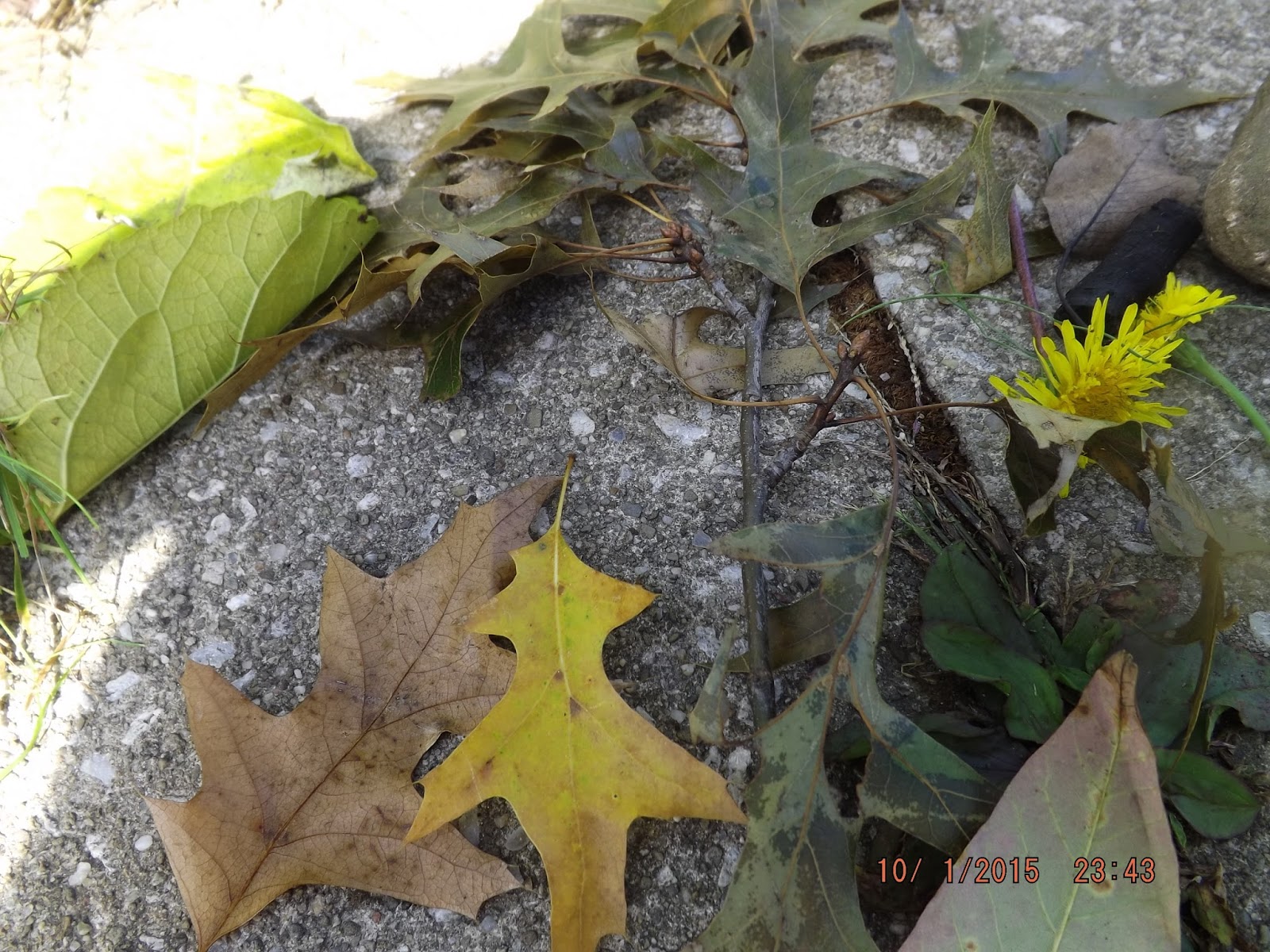

Two weeks ago Beth searched our property for fall nature samples. We have a lot more yellow, red, and orange this week.


Fall means Kent State University football games. They don't care for pro football, but college football rules their fall fun (or at least Paul's). They even play it out back with their sisters, which is a hoot. My husband is frequently gifted with tickets from various people at one of his workplaces, which makes up for the fact that we don't have cable to watch games. They see a few online via ESPN3, however.


I'm using recordings more and more in my homeschool. Here Beth is drawing from a library book while listening to Psalm 23 on my cell phone with headphones (recorded by my voice). She memorized it for AWANA this week and each time she recited it I choked up. Few things are sweeter than a six year old reciting Psalm 23.

Life News:
One of our Compassion International correspondent children left the program due to her family becoming more independent. They felt they could take care of her by themselves, leaving room for another needy child. She's been a delight to correspond with this past year, as our newest child, eight years old from Nicaragua.

That night, after Compassion called me about Abdi, they put a new correspondent child on my account: Brayan, a 13-year-old boy from the Dominican Republic; he lives with his mother and sadly, his father is deceased. I went into my account to write the October letters to our children and there he was... a precious new heart to share with. They told me they'd put me on a waiting list, so that was fast!

A correspondent child is not a sponsor child. Someone else, often a big company, will sponsor children but not commit to writing--writing being something that, along with helping in Jesus' name, is the cornerstone of Compassion International's program. They immediately assign a correspondent for these children.

We became correspondents in 2011, before we could afford to sponsor for $38 a month. After that we were so hooked on the experience, we sponsored a child without waiting for the budget numbers to work out. We've never missed a payment. Then we acquired another correspondent child, and then leaped ahead with another sponsor child. The last two have been correspondents, and that is the end of our faith walk for now. We can't squeeze another inch from this budget, though my heart longs to come up with more and more increments of $38, because these children are precious to their core and their letters are like gold. Outside of marrying and giving birth to my own loved ones, these children are the highlights of my life.

Call Compassion at 800-336-7676 to be a correspondent to a third-world child, which is a fantastic heart and learning endeavor for the whole family. Your children will grow in gratitude just by being exposed to these wonderful children...and they will fall in live with each one. You should try to write every six weeks or more often, which you can do online at Compassion (and you can attach photos).

 You can send monetary gifts online (for sponsor children) or over the phone for correspondent children. These gifts profoundly impact daily living conditions, like providing shoes, mattresses, or a non-leaky roof--all of which improve their performance in school. The personal letters remind them that God loves them...that he has not forgotten them...that he has plans to prosper them and not harm them.

Praise God for being able to speak these things into their lives. If you've been reading my blabber about this for years now, but haven't taken the leap, go right now to Compassion to have your life changed. (But use the phone number above to become just a correspondent. You can only sign up for a sponsorship online).

Homeschool Readings:

~ The boys finished Treasure Island, which Peter liked. Paul felt that though it was exciting in the end, it dragged at the beginning and it was too dark. Now they're reading Susan Warner's 1850 Christian, sentimental novel, The Wide Wide World, considered the first bestseller. It isn't listed in any of the literary analysis sources I invested in, but literary analysis is available online. We started reading it free on the Kindle, but that copy had so many errors we switched to a Gutenberg Project copy, which is how we read Elsie Dinsmore novels too. Did you know that Elsie mentions reading The Wide Wide World in Elsie's Girlhood? After I spoke about that famous novel and they heard Elise talk about it, they wanted to read it next.

I'm reading Pilgrim Stories to all of them, which is very interesting, and next we'll read The Courage of Sarah Noble, as part of the girls' Beautiful Feet Early American History.

The boys really love two things in particular so far this year: General Science by Apologia, which they've really taken to after years of Sonlight Science, and The Story of the World history series. They have one and a half books to go in that history series. They'll certainly be sorry to see it end!

Here are some 2015 across the curriculum Picture books we've enjoyed:

If You Plant a Seed by Kadir Nelson, published March, 2015:


Synopsis: Kadir Nelson, acclaimed author of Baby Bear and winner of the Caldecott Honor and the Coretta Scott King Author and Illustrator Awards, presents a resonant, gently humorous story about the power of even the smallest acts and the rewards of compassion and generosity.

With spare text and breathtaking oil paintings, If You Plant a Seed demonstrates not only the process of planting and growing for young children but also how a seed of kindness can bear sweet fruit.

The Full Moon at the Napping House by Audrey Wood published September, 2015.


Synopsis: In the wide-awake bed in the full-moon house, everyone is restless! The moonlight is pouring in and no one can get to sleep: not Granny, her grandchild, the dog, the cat, or even a mouse. It's not until a tiny musical visitor offers up a soothing song does the menagerie settle down, and finally everyone is off to dreamland.

With a perfectly crafted text and stunning paintings, Audrey and Don Wood reveal once again why they are picture book creators of the highest order. The Full Moon at the Napping House, the highly anticipated follow-up to their beloved classic The Napping House, is the ideal book to share at bedtime or anytime.

Voice of Freedom: Spirit of the Civil Rights Movement by Fannie Lou Hamer, published August, 2015


Synopsis: Despite fierce prejudice and abuse, even being beaten to within an inch of her life, Fannie Lou Hamer was a champion of civil rights from the 1950s until her death in 1977. Integral to the Freedom Summer of 1964, Ms. Hamer gave a speech at the Democratic National Convention that, despite President Johnson’s interference, aired on national TV news and spurred the nation to support the Freedom Democrats. Featuring luminous mixed-media art both vibrant and full of intricate detail, Singing for Freedom celebrates Fannie Lou Hamer’s life and legacy with an inspiring message of hope, determination, and strength.

Lillian's Right to Vote:A Celebration of the Voting Acts Right of 1965 by Jonah Winter, published July, 2015


Synopsis: An elderly African American woman, en route to vote, remembers her family’s tumultuous voting history in this picture book publishing in time for the fiftieth anniversary of the Voting Rights Act of 1965.

As Lillian, a one-hundred-year-old African American woman, makes a “long haul up a steep hill” to her polling place, she sees more than trees and sky—she sees her family’s history. She sees the passage of the Fifteenth Amendment and her great-grandfather voting for the first time. She sees her parents trying to register to vote. And she sees herself marching in a protest from Selma to Montgomery. Veteran bestselling picture-book author Jonah Winter and Coretta Scott King Illustrator Award winner Shane W. Evans vividly recall America’s battle for civil rights in this lyrical, poignant account of one woman’s fierce determination to make it up the hill and make her voice heard.

The Bay Boy & His Violin by Gavin Curtis (not a new book)


Synopsis: Reginald loves to create beautiful music on his violin. But Papa, manager of the Dukes, the worst team in the Negro National League, needs a bat boy, not a "fiddler," and traveling with the Dukes doesn't leave Reginald much time for practicing. 

Soon the Dukes' dugout is filled with Beethoven, Mozart, and Bach -- and the bleachers are filled with the sound of the Dukes' bats. Has Reginald's violin changed the Dukes' luck -- and can his music pull off a miracle victory against the powerful Monarchs? 

Gavin Curtis's beautifully told story of family ties and team spirit and E. B. Lewis's lush watercolor paintings capture a very special period in history.

Enormous Smallness: A Story of E.E. Cummings by Matthew Burgess, published April, 2015


SynopsisEnormous Smallness is a nonfiction picture book about the poet E.E. cummings. Here E.E.'s life is presented in a way that will make children curious about him and will lead them to play with words and ask plenty of questions as well. Lively and informative, the book also presents some of Cummings's most wonderful poems, integrating them seamlessly into the story to give the reader the music of his voice and a spirited, sensitive introduction to his poetry.

In keeping with the epigraph of the book -- "It takes courage to grow up and become who you really are," Matthew Burgess's narrative emphasizes the bravery it takes to follow one's own vision and the encouragement E.E. received to do just that.

Let's Knit: Learn to Knit With 12 Easy Projects by DK publishing, published September, 2015


Synopsis: This guide for budding beginner knitters shows how to master the basics of knitting. Includes easy to follow steps for projects such as Brilliant Bracelets; Finger Fun; Fred's Hat and Scarf; and more. Ages 8-12. Fully illustrated in color.

How Jelly Roll Morton Invented Jazz by Jonah Winter, July, 2015


Synopsis: In this unusual and inventive picture book that riffs on the language and rhythms of old New Orleans, noted picture book biographer Jonah Winter (Dizzy, Frida, You Never Heard of Sandy Koufax?) turns his focus to one of America's early jazz heroes in this perfectly pitched book about Jelly Roll Morton.

Gorgeously illustrated by fine artist Keith Mallett, a newcomer to picture books, this biography will transport readers young and old to the musical, magical streets of New Orleans at the turn of the 20th century.

Boy, Were We Wrong About the Weather! by Kathleen Kudlinski, published August, 2015


Synopsis:

Ancient Sumerian warriors used to think that lightning and thunder were caused by an angry weather god —boy, were they wrong!

Even today once common ideas about how our weather and climate work are changing as new discoveries are being made. Kathleen V. Kudlinski and SebastiĆ  Serra team up to debunk old—and sometimes silly—myths about weather and to celebrate the pioneers that made meteorology the science it is today.

This award-winning series is especially meant for the budding scientist and is perfect for children who are fascinated by the natural world and how it works.

Thanks for reading some of this here novel of mine. Didn't mean to make it soooo long. Have a blessed weekend!


Weekly Wrap-Up

Friday, August 21, 2015

Homeschool Day in the Life (and Elsie Dinsmore)


I am waiting to see how a natural, workable rhythm develops before I write a daily schedule. A few weeks into school, this is how our days are rolling.

My husband gets home at 7 PM, making us night people (though we are naturally, anyway). The kids go to bed at 9:00 (girls) and 10:00 (boys). I go to bed between 11:00 PM and 1:00 AM, and my husband retires between 10:30 and 11:30.

7:30 - 8:00 - My two girls (ages 6 and 8) and I wake up, while the boys sleep until 8:30 or 9:30 (boys are 11 and 13). The boys don't always fall asleep as soon as we put them to bed, and since studies show teens need morning sleep, I don't try to alter their wake-up time.

I start slowly in the mornings due to chronic headaches, but within an hour I begin making oatmeal and start the laundry. The girls have about 90 minutes of free time, during which they will draw, or play dress-up and pretend they are orphans, or school marms, or enter into some other make-believe world.

When alone, Mary is all about nature (frogs, toads, praying mantises, grasshoppers, crayfish, snakes), but with Beth she is all about pretending, and engaging in very physical play. My girls' energy levels are more what you'd expect from a couple of boys. They are hyper, touchy-feely, and exuberant (read: exhausting but full of love and charm).

9:30 - We start seatwork, comprised of journal writing and grammar for the boys, and narration, copywork, journal writing, and math fact practice for the girls.

Boys Writing: The boys either have a question to respond to about a Sonlight novel, or they do a 10-minute writing plunge from the teacher's manual of Jump IN: A Workbook for Reluctant and Eager Writers. Once a week, they choose one of their ten-minute writing plunges to rewrite for a grade. Otherwise, the plunges stay in rough-draft form. Plunges help writers develop their writing voice.

The Sonlight literature-response questions often take two days to respond to, with the second day including a rewrite (I give the questions, not the Sonlight curriculum).

Girls' Writing: I read a literary selection from Writing With Ease 1 and ask the girls questions about it, and then have them narrate it back to me. I then have them formulate one or two sentences about the passage, and they watch and help while I write it. I have them read it carefully back to me, and then those sentences become their copy work.

Two to three days a week, they free write in their journals.

After I get the girls to the copywork point, I start making our bread for lunch using our breadmaker on the dough cycle. It kneads it twice and after the first major rise, I roll out the bubbles with a rolling pin and shape the dough, placing it in a bread pan to rise in our oven for 45 minutes, followed by baking for 30 minutes.

10:30 - Next, I take my shower, during which my girls watch Wild Kratt's on the Kindle (no TV signal here) or access a Reading Rainbow book on the Kindle. The Kindle is best at this time because my girls are too rambunctious to be left unsupervised without a structured, quiet activity in place. It is very stressful to be showering and listening to rambunctiousness, wondering who is going to end up with stitches at the ER.

During my shower, my boys continue school with novel reading or science reading. They're in the same grade so they have to share all materials, alternating the use of their books.

11:30 - After my shower the girls do more math with me, and then all the children have outdoor time, while I work on dishes and laundry.

1:00 to 1:30 - Next, the bread is sliced and we have lunch, followed by devotions.

1:30 - 2:00 Devotions starts around this time and goes for about an hour. The children draw during the readings, but not during prayer. First, I read aloud from the Bible, followed by my reading an Elsie Dinsmore novel, which read more like devotionals.

Following the reading, we all take turns praying, with me including in my prayers a request to guide our characters according to what we read from the Bible passage and/or the Elsie Dinsmore.

I bought the first three Elsie books for a couple dollars each, which we read on the Kindle Paperwhite, but the rest of them we are accessing from Project Gutenberg for free on the Kindle Fire (see bottom of this link for all the Gutenberg links).

That's it for now. The second half of our day will be detailed next week.

Literary notes about Elsie Dinsmore (because it's controversial) and other sentimental, 19th century literature

Written between 1867 and 1905, the Elsie Dinsmore novels are didactic in nature, written with the purpose of influencing the spiritual growth of women and children (though appropriate and interesting to boys, too). After the first 12 novels of the series, the books read more like travelogues, with weaker or non-existent plots. Originally, I thought we'd read the whole series, but after researching it, we probably won't get beyond the first 6 or 7 as a family.

After the turn of the century, Americans, less evangelical as a whole, enjoyed pluckier heroines like Anne Shirley (Anne of Green Gables - 1908) and Jo March (Little Women - 1868). Though there's very little Bible in Little Women (Alcott wasn't a Christian, but a transcendentalist), it's still a coming-of-age character-shaping book, which many adult readers claim is too moralistic.

We've come a long way in the wrong direction, haven't we, in girls' and women's literature? No longer is the character or moral development of the reader any concern at all, which is why evangelicals are primarily responsible for the rebirth of Elsie Dinsmore. After outselling all but Little Women, (Elsie Dinsmore selling 5 million copies during its 70-year market reign) the Elsie series went out of print for 30 years, starting in 1943.

Including British readers, Elsie enjoyed 25 million readers--a figure encompassing more than just the first novel.

Martha Finley, the author, was an unmarried minister's daughter who wrote Sunday School literature. She suffered chronic back problems which left her often bedridden and dependent on her brother financially. Unsatisfied with her plight, she prayed that the Lord would provide her with some means of an income. Shortly thereafter, Elsie Dinsmore was born, and so adored that the public kept demanding more and more sequels, even dictating the name and subject matter of Elsie's Widowhood.

While Elsie was beloved by the reading public, critics didn't review it positively, and still don't for the most part, partly because of a lack of understanding of the genre itself, and the audience for which Elsie was intended. Nineteenth-century women's and girls' writings included stylistic flaws (like overuse of adverbs and telling with passive verbs, rather than showing, and with dialogue of the he said-she said variety) at which literary critics turn up their noses. The writings reflected the conservative Protestant era and conscience, in which character and religious training were of utmost importance.

I should add here that Miss Finley's writing does include exceptional vocabulary words (most still used today in learned circles). It's sure to expand the expressive and receptive vocabularies of your whole family. Also, note that her sentence structures are varied and complex. This is not twaddle by an means. It is good literature, just not quite expert.  Little Women, which most regard as good literature, was written with the same stylistic characteristics, and indeed both authors wrote far and away better than JK Rowling (Harry Potter), for example.

Other examples of these didactic, sentimental (also called domestic) fiction writings include Susan Warner's Wide, Wide World (1850), Harriet Beecher Stow's Uncle Tom's Cabin (1852), and Maria Susanna Cummins' The Lamplighter (1854). The era most known for these writings was 1850 until after 1870.

Elsie Dinsmore is controversial (either loved or hated) for various reasons, all of which I'll address:

~ The relationship between Elsie and her father, Horace, is described by modern-day critics to be too erotic (too much kissing and caressing). I've even seen this accusation on evangelical, homeschooling sites (homeschoolers and evangelicals are the largest reading public right now for Elsie Dinsmore). This accusation is entirely related to the outdated language, which we cannot, in our era, understand, due to our overly-sexualized culture. A caress or a passionate kiss did not constitute sexual language in that era. Also, I think we're just plain less affectionate nowadays, which isn't a good thing for children and young people.

~ Elsie cries a lot and the overall emotion of the novel is entirely overwrought, which sickens some readers. Emotion doesn't bother me, folks. I'm sappy, sappy, sappy and my kids are sappy too. My husband stands out as the only non-sappy one here. I can only say in Elsie's (or the author Martha Finley's) defense that this was, after all, termed sentimental fiction for a reason. It's supposed to tug on your heartstrings and make you weep for your beloved little heroine.

~ Elsie's character is too perfect and unrealistic. Some people hate her for her goodness and her spouting of Scripture constantly. Kids can't relate to her, critics say. Well, again, this is didactic literature, meant to influence women and girls' consciences. It is supposed to be like Pilgrim's Progress--suitable for futhering one's Christian growth and development. And Elsie is very humble, always saying she's a wicked sinner saved by grace. She loves the Lord exceedingly, partly because she had no family to speak of for the first 8 years of her life, and then some. Her relationship with the Lord is how she handles everything that comes her way. It is safe to say that her personal relationship with Jesus is what the Lord would have us all enjoy. The Lord is her strength and her song.

Also, Elsie is not supposed to be a real person, but a vehicle by which girls and women can be spurred on in their faith. My four children love and admire Elsie, and are never worried that they can't measure up to her, partly because Elsie does have a flaw (stubbornness), making her seeming angelic personality more of an illustration that we can never be good enough for God--and thus, the Cross. She is a very good little girl, and very obedient, except when her unbelieving father asks her to do something that violates her strict Sabbath observation. The problem is, she chooses something minor to make a stand on, which makes her case less compelling than it could be.

As you'll see if you read it, both Elsie and her father suffer from the same major flaw.

~ Elsie Dinsmore is racist literature. There is an Elsie Dinsmore Life of Faith modern rewrite that takes out some of the racist parts, but leaves out historical information. The original Elsie Dinsmore includes speech and attitudes which reflect a romanticized view of plantation living. Elsie is very rich and owns slaves, but she treats them well, buying them Christmas gifts and attending to them when they are sick, procuring doctors for them when needed, reading the Bible to them, and genuinely loving them. Later, she builds a school to educate them (after slavery was abolished), and her own slaves stay with her to work for wages--wages better than any other plantation owner pays. Elsie's slaves adore her and never want to leave.

Now, Martha Finley lived in the North, so it's fair to say she didn't have first-hand knowledge of plantation life. She treats the Civil War itself fairly, not siding with one or the other, but she presents a benevolent view of slavery--almost as though Elsie was doing her slaves a favor in owning them.

This novel is a reflection not of a slave's desire to be owned, but of the mixed views and emotions about which Christians thought of slavery. The idea that if you treat your slaves well, then it is okay to own another person, is of course ludicrous. It is offensive, but we have to regard period literature as a reflection of its time.

Someday, in regard to abortion, our society may be regarded as barbaric, depending on how views change over decades and centuries--and on how God intervenes. I would hope, like with slavery, that history makes the more righteous about-face. It took a very long time for views on slavery to change, and I fear it may be the same for abortion.

~ Elsie's father is cruel and abusive, and Elsie never stands up for herself (too passive). True, Elsie's father in the first two books can be cruel and jealous. These first two books are intense, until he becomes a Christian at the end of the second. Martha Finley initially wrote one long book, which the publishers broke up into two novels, explaining why Elsie Dinsmore ends abruptly, and the second book Elsie's Holidays at Roselands, picks up as if it's the next paragraph.

One more characteristic of sentimental women's fiction is that the female lead is redeemed through her submission to her father (usually) and to God. Her growth and maturity are earned through her eventual, successful management of her will. It's not a saved-by-works philosophy, but a saved-by-submission philosophy, with the Lord working the miracle in the heart of the heroine, and sustaining her through the process. Elsie is saved even at the beginning of the novel, but it is her submission to and deep and abiding love for God, throughout the novel, that eventually wins her father over.

She sacrifices herself to submit to God, becoming ill, and the symbolism (whether Martha Finley intended it, I don't know) at the end of the ordeal, is of her dying and coming back to consciousness, giving her father time to reflect on his cruel behavior and heart, and then submitting his own life to the Lord. It reminds one of Christ's sacrificial death that ultimately redeems us.

Contrast this with the plucky-girls literature popular after the turn of the century, in which girls matured and gained in poise and character through the passage of time, rather than through faith in the Lord, or through submission, or through any adherence to Scripture.

I love Elsie Dinsmore because she fills a void in modern society--at least in modern Christian society. As a character who deeply loves the Lord and wants to please him above all else, she is one of a kind. My children love her dearly, too.

That's my story and I'm stickin' to it. Your results may vary.

And thanks for reading today!

Weekly Wrap-Up

Friday, June 19, 2015

Weekly Summer School and Life Wrap-Up 6/19


Giving Thanks Today:

~ Reading Colossians at night for family devotions. My favorite verses so far: Colossians 1:10-14 We continually ask God to fill you with the knowledge of his will through all the wisdom and understanding that the Spirit gives,10 so that you may live a life worthy of the Lord and please him in every way: bearing fruit in every good work, growing in the knowledge of God,11 being strengthened with all power according to his glorious might so that you may have great endurance and patience,12 and giving joyful thanks to the Father, who has qualified you to share in the inheritance of his holy people in the kingdom of light. 13 For he has rescued us from the dominion of darkness and brought us into the kingdom of the Son he loves, 14 in whom we have redemption, the forgiveness of sins.


~ Children kneeling in the yard, searching for the glory of God in the form of caterpillar, frog, toad, katydid, grasshopper.

~ That we have a yard at all is an excellent blessing in itself, and a good-sized one a huge grace.

~ A 13-year-old son willing to do yard work for the elderly from our church, along with a few from his youth class. I told him God would reward him, and besides, an excellent way to meet friend, or later, a wife, is through serving the Lord alongside one another.

~ A dancing, singing, exuberant six year old

~ A husband in tune with people more than tasks (to balance me)

~ Nice librarians this year

~ Natural Vanilla Bean ice cream on hot nights.

~ The Lord's ever-present comfort.

~ A hope and a future

~ Boys growing in grace and obedience

~ Precious time with my children.

~ In times of darkness, a promise of sunshine coming.

~ Sharing Christian stories of His grace and love with my children, to spur them toward moral excellence.

Good Friday to you all. I hope you've had better weather than Northeast Ohio this week. Clouds, rain, thunder, clouds, rain, thunder. Depressing. No sunlight lasting more than an hour or so. I have to wonder how the gardens and the local sweet corn crops will survive. This is the third summer in a row with unfavorable weather.

Mary's storm phobia raged with the thunder and lightning this week. She asks to watch library movies when the skies are dark and scary--she says to get her mind off the scary possibilities (like the roof caving in if lightning strikes one of our huge trees). In order to give her a better option, I canceled our Kindle Unlimited subscription and ordered something produced by Reading Rainbow for the same price per month. It offers expertly narrated books with interactive parts, such as birds that fly through the air when you click on them. Many of the books are non-fiction science picks which my kids love. Recently launched, it's called Skybrary. The cost is $9.99 per month, or less if you order for 6 or 12 months.

Introducing Skybrary by Reading Rainbow:

Synopsis(May  13,  2015)  Los  Angeles – Beloved children’s brand Reading Rainbow® today launches SKYBRARY®, the  all-­new, web-based  digital library of hand-­curated children’s books and story-­driven educational video field trips, created for kids ages 2-­9. Designed to entice and excite children’s natural sense of curiosity about their world, SKYBRARY delivers an adventure-­based unlimited book reading and video field trip experience. Built on the foundation of the industry leading educational App launched in 2012 and the Peabody Award-­winning television series, SKYBRARY was funded by the record-­breaking 2014 Kickstarter campaign. SKYBRARY is a new portal to the world of Reading Rainbow, inviting every child with Internet access -­-­ at home, at school or at the library –­ to develop a passion for reading and to experience the fun of learning.
Young readers and pre-­readers pilot their own personal hot air balloons among SKYBRARY’S seven unique themed islands, each featuring a wide array of quality literature and video content. These engaging worlds of animals, music, adventure, science, heroes, friends and family feature over 500 books from esteemed authors and acclaimed publishers, made available to children as “read by myself” or “read to me,” and contain interactive elements that enhance enjoyment while preserving the reading experience. Over 150 newly produced and classic video field trips with host LeVar Burton show children they can “Go Anywhere, Be Anything” as they are taken behind the scenes to places like the White House, the Los Angeles Ballet, the Grand Canyon and Cirque du Soleil.
“The importance of developing a passion for the written word can not be over stated — ­children who love to read have the greatest tool to reach their highest potential,” said the 12-­time Emmy Award-winning Burton. “Our determination to encourage the love of reading and learning in every child, everywhere is more steadfast now than ever before.”
Other School News

We've averaged about 90 minutes to 2 hours of school each day this week. I had the boys write an essay about their ideal summer, and the girls dictated the same to me. I'll share those, plus a new writing resource, and some library books we loved, along with some pictures of the kids' activities this week.

For my part, quite a bit of time was spent gathering 7 bags of items for Goodwill! 

First up...the summer essays. I reflected on these and realized these are the things the children do most days, so apparently they're all living their best summer ever. The only missing links are a lake beach trip (30 minutes away), which the weather has yet to allow, and a vacation and camping trip.

Essays About Summer

Paul's Essay (age 11):

My best summer ever would include certain weather, summer projects, and activities. I will write about each separately.

My favorite summer weather would range from 67 degrees to 92 degrees. It would be sunny to partly cloudy, rain once or twice a week, and thunder only once a month. It would never rain or thunder on weekends.

My summer projects would be to write and publish a book, make lots of toys and games, and write a Bible study.

My summer activities would include: having a huge garden, playing sports with my family, playing board games every day. Every Saturday I would either go bowling or go to the beach, depending on the weather. 

These things would be included in my best summer ever. What would you include in yours?

Peter's essay still needs an ending, but here it is, unfinished.

Peter's Essay (age 13):

During my best summer ever I would serve God in any way possible, and I would do lots of activities. I would see nature and glorify the God who made me.

In my perfect summer I would see: lots of toads and frogs, newts, bigger salamanders, lots of birds, lots of flowers and butterflies, and turtles. I would catch a giant bullfrog.

My activities would include going on vacation, going camping, going on lots of park trips and fishing trips, going to church, and biking for exercise.

Mary's Best Summer Ever (age 8):

I would spend all my free time in the garden catching grasshoppers, crickets, caterpillars, grubs, and any kind of insect I find interesting. I would look for toads and frogs and snakes and turtles.

On rainy days I would feed my bugs and hold them. On really pouring days I might watch a library movie or play a game with Paul. I would also make crafts.

On park days I would fish with Peter, play on the swings, catch more insects, and walk around the bushes looking for toads.

At night I would bug my mom to let me catch fireflies or night crawlers every night, no matter how much sleep I get.

Beth's Best Summer Ever (age 6):

On sunny days I would be a princess and practice my princess manners, and my princess dancing and walking. I would play and sew and do hopscotch with Paul, and do stuffed animal crafts.

On rainy days I would make a dress, go out in the rain and take off my shoes and warm my feet in the muddy puddles. I would watch a library movie with Mary and lie down to rest. I would snack on a carrot, my BFF. Or maybe on ice cream.

Pictures From This Week:


Beth continues to create projects and huge messes. This week she mostly stapled papers together to make books, but there were other things too. Above is a box she unfolded and made into a flying jet. She sits on it and puts her hands on the "controls" (the pencils she duct taped onto the cardboard).


She made a Bible book detailing the David and Goliath story.


She painted.


She made a guitar out of cardboard and a rubber band.


She single-handedly created a disaster out of our house, as you can see in the following three pics from three different areas. 


These are all of the family room, which the previous owners converted a one-car garage into. It has always been a playroom for the kids. They don't use it much anymore, though, due to the colossal messes Beth makes in there. She's been stomping her feet and fussing when I ask her to clean her messes. Peter and Paul have taught me that this stage doesn't last forever. They don't like to clean, but they do it without stomping or complaining, 90% of the time now.

Allowing kids to make messes is very, very important. Their jobs are to discover, invent, create, explore. A childhood full of these things is a rich one. They don't need programs, classes, or a trip to Europe or Disney World. They need time, the most wonderful part of childhood. Time to discover, invent, create, explore. Not a childhood without responsibility, but one that adds it incrementally, while not crowding out the imagination.

Reflecting On My Own Childhood

My upbringing was quite a bit different from my children's. They've lived in one place for ten years, which is unusual in America now. I was born in Germany, lived in England at three years old, and Guam and Sicily later. My dad and stepdad were both in the military.

I was a seventh and eighth grader when we were in Sicily for 14 months. I remember some things about it: the beautiful ocean, the open markets, the weird personal pizzas, served on a dinner plate with peas and sliced boiled eggs and lots of olive oil. There were a lot of pastry shops. There were lewd magazines visible everywhere in the cities, and some of the men were touchy freely and rude with girls.

Many of the Italians wear their clothes for two to three days, producing a body odor they apparently like, but which I personally had trouble with (we Americans are unique, perhaps, in our daily showers and clothing changes--although there is certainly variation in this here). The towns closed down each day for siesta until late afternoon. The nights went late, and some children were served wine with dinner.

I didn't really like traveling all over. My memories are all disjointed and my acquaintances short and sketchy, until my stepfather retired (while I was in high school).

Now, I wouldn't mind traveling for short periods, mostly to see the world's beautiful nature spots and phenomena. Definitely, if we ever have the money (which I pray for) I would go to see each Compassion child.


We haven't seen the raccoon in several weeks, but we have a wild bunny now, chewing parts of the garden.


Mary is my fourth child to get eyeglasses. She's nearsighted like Paul and myself. Here she's observing a tiny water snail.


Peter and Beth looking for creatures in our backyard.


Some of these pictures, including the above frog, were taken as possibly entries for the library's annual photo contest, which Peter and Paul are eligible to enter.


Paul's painting\


Today they got out a motor from an erector set and tried to use it to make a motorboat, at Mary's request. She started the project and got too frustrated, until the boys mentioned they had a motor in their erector set. Here. they were trying to balance the metal for some reason.


A couple years ago they planted a milkweed plant so we could have more milkweed caterpillars and monarch butterflies. Now, the milkweed plants have multiplied and are slowing taking over the strawberry patch. 

I had to buy strawberries today. Our patch seems to be done for the season.


When I downloaded this pic, I asked the kids who took the frog picture at a pond, and they said, "Mommy, that's not a pond. That's behind our air conditioner." (Where they can always find frogs). Last year I told them to put grass sod over this area, but I can see the little rascals dug it up again.


This is a gigantic water balloon.


This spider has babies on its back! My children saw them crawl off, amazingly enough.

Library Books We Enjoyed:

The Mouse and the Meadow 
Written and Illustrated by Chad Wallace, published 2014


Synopsis: A young mouse quickly comes of age as he sets out to explore his meadow. There he meets many remarkable creatures. Spider has tangled intentions. Firefly really knows how to put on a show. Mother rabbit is kind. Turtle is wise. Others would have him for lunch! Fortunately, help arrives just in time.

My Thoughts: The illustrations are so wonderful in this book. We marveled over each one! A sweet story.


Elephantastic 
by Michael Engler, published Feb, 2015


SynopsisYou never know when a best friend will be delivered to your doorstep. And that s just what happens to Andrew when a mysterious box arrives with a talking stuffed elephant inside! The two friends set off on an adventure, climbing Mount Kilimanjaro, crawling through the sun-filled savannahs of Africa, and exploring the deep and dark jungle. It s a wonderful afternoon until Andrew s mommy interrupts. It turns out that the box was delivered to the wrong doorstep. It was actually meant for Louise, the neighbor upstairs. . . ."

Potatoes, Potatoes
by Anita Lobel, published 1967 and 2004


Synopsis: There was once an old woman who had a potato farm and two hardworking, loving sons. But one day one son ran away to the army of the east; the other son joined the army of the west.

Caldecott Honor artist Anita Lobel tells a powerful story of two brothers who become enemies at war, and their wise mother whose cleverness turns fighting into peace.

A new, full-color edition of the timely and timeless tale Potatoes, Potatoes.

The Princess of 8th Street
by Linas Alsenas, published 2012


Synopsis: Jane, the Princess of 8th Street, has many royal duties to attend to. Between having tea with her “ladies-in-waiting” (her doll collection), keeping up with her studies (Math for Monarchs andPink Power are two of her favorite books), and dealing with her horrible toad of a brother, Jane doesn’t often have time to venture from her palace or socialize with other young royals.But one day, on a trip to the market, her mother insists that Jane go play in the park with the other children. Jane is shy around the other young lords and ladies, and things become even worse when she is confronted by Samantha, the Princess of 10th Street. Will the two princesses be able to overcome their differences? Will Jane finally make a friend?
This cute and clever picture book proves there’s more to being a princess than just dresses and tea parties.

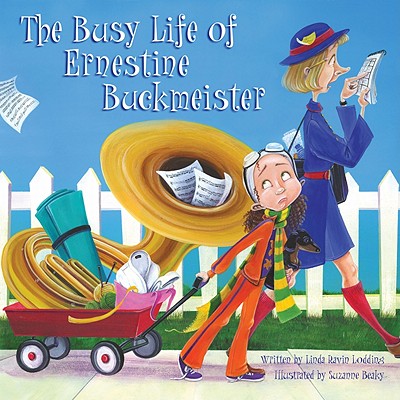
The Busy Life of Ernestine Buckmeister
by Linda Ravin Lodding, published 2011


Synopsis: Ernestine is in over her head. Monday through Sunday, Ernestine's week is packed with after-school lessons--tuba, knitting, sculpting, water ballet, yoga, yodeling, and karate. Overwhelmed and exhausted, Ernestine decides to take matters into her own hands and heads off to the park with her Nanny where she builds a fort, watches the clouds, and plays all kinds of unstructured and imaginative games. But when a teacher calls Ernestine's mom to report that she has not shown up for yodeling, her parents search everywhere until at last they hear their daughter's laughter coming from the park. Ernestine tells her parents what a wonderful afternoon she's had, and explains her plight, asking, "I like my lessons, but can't I stop some of them?" This saga hilariously captures the dilemma of the modern-day over-scheduled child in riotous color and absurd extremes. A delightful heroine, Ernestine will be sure to put "play" back on everyone's agenda, demonstrating that in today's overscheduled world, everyone needs the joy of play and the simple wonders of childhood.

Math World Telling Time
by Bridget Heos, published March, 2015


Synopsis: "A young boy learns to tell time on digital and analog clocks as he impatiently waits for a friend to come over to play."--

New Writing Curriculum Found


Apologia Jump In 2-Book Writing Set
Here is the review by Cathy Duffey (one of her top 102 resources)


Synopsis: Jump In will help your student learn to write persuasive papers, expository essays, descriptions, narration, and poetry. The easy-to-use parent/teacher section includes what to look for in an assignment, how to assign a grade, how to help the student proofread, and a one-year writing program with daily writing prompts designed to be fun and interesting. This two-volume set includes an illustrated student workbook and a teacher’s manual. $40 set

On the blog this week:

Just Say No to Video Games

Causes of Addiction to Video Games, Technology

Around the Web This Week:

You Can't Serve God and Entertainment

Binge-Eating, But Starving

Peaches in Paradise: Why I loved Elisabeth Elliot, by John Piper


Did you know Elisabeth Elliot died this week, at age 88? She declined and became an invalid in the last decade (10-year battle with dementia), and her husband took care of her, along with nursing help. Here is a tribute to her, from a grateful wife and mother: Do the Next Thing: A Mother's Gratitude for Elisabeth Elliot


How was your week? Thank you for being here!


Weekly Wrap-Up