Saturday, May 10, 2014

Susannah Wesley's Mothering

We've covered Susannah Wesley, the wife, but not Susannah the mother.


From the writings Susannah and her son John left behind, we have a solid picture of a very disciplined, dedicated mother, who made her children her life's work. I think the best format for our discussion is for me to list all the known characteristics, and then comment some at the end.

First, let me put in a word about Susannah's salvation, which may have occurred later in life, surprisingly. Her sons John and Charles Wesley both had a spiritual awakening near their thirties, following some exposure to the Morovians, who seemed to display a more intimate, personal relationship with God, compared to the Wesley brothers.

The brothers sometimes had spiritual doubts, wondering about their eternal security, though they were strongly churched--strongly rooted in morality and religious teaching and discipline. Both describe a warm, miraculous awakening that unmistakably changed them forever, and gave them personal assurance of their salvation, and more peace in their daily walks.

They wrote to their mother about this awakening, which they had heard their father preach about for years, but had never personally experienced. Of course Susannah was surprised and even a bit alarmed, but in the last couple years of her life she experienced the same unmistakable thing and died in great peace.

I spoke with my Bible-college husband about this, and he believes the brothers were referring to "a second work of grace", which is a popular doctrine in some Protestant denominations.

Wikipedia describes it thus: According to some Christian traditions, a second work of grace is a transforming interaction with God which may occur in the life of a Christian. The defining characteristics of this event are that it is separate from and subsequent to salvation (the first work of grace), and that it brings about significant changes in the life of the believer.

John Wesley, the founder of the Methodist movement, taught that there were two distinct phases in the Christian experience. During the first phase, conversion, the believer received forgiveness and became a Christian. During the second phase, sanctification, the believer was purified and made holy. Wesley taught both that sanctification could be an instantaneous experience, and that it could be a gradual process.


John's personal writings confer with brother Charles's, that this experience gave them greater assurance of their salvation and a more personal peace. To me it sounds as though their previous religious experiences were on an intellectual plane primarily, while finally, after this awakening, they had heart knowledge of Jesus' work on the cross and what it meant for them personally. I'll leave it up to you to interpret this awakening as you will, but I know that millions of people attend church while never experiencing conversion, because not all churches are evangelical, Gospel-teaching, Bible-believing. Attending an evangelical church doesn't assure a conversion experience, either.

The Church of England, the religious tradition the brothers came from, was not considered evangelical, but their father, Samuel, once attended a Dissenter's seminary before returning to the Church of England and going to Oxford. He could have been exposed to more evangelical doctrines, which he brought into his Anglican parish (his preaching style earned him more enemies than converts, so I presume it wasn't usual Church-of-England stuff).

Now on to Susannah's mothering...

 Susannah is famous for the 16 rules she laid down in her home.

1.
Eating between meals not allowed.

2. As children they are to be in bed by 8 p.m.

3. They are required to take medicine without complaining.

4. Subdue self-will in a child, and those working together with God to save
the child's soul.

5. To teach a child to pray as soon as he can speak.

6. Require all to be still during Family Worship.

7. Give them nothing that they cry for, and only that when asked for politely.

8. To prevent lying, punish no fault which is first confessed and repented of.

9. Never allow a sinful act to go unpunished.

10. Never punish a child twice for a single offense.

11. Comment and reward good behavior.

12. Any attempt to please, even if poorly performed, should be commended.

13. Preserve property rights, even in smallest matters.

14. Strictly observe all promises.

15. Require no daughter to work before she can read well.

16. Teach children to fear the rod.

Other Notes:

After the second devastating house fire, her children were farmed out to relatives for a period of up to two years. When the rectory was rebuilt and they all came back together, Susannah was appalled at the bad habits of mind and manner the children had acquired while away from her. She began a strict daily regimen to reform them, some of which wasn't new but had been started with the older ones in prior years.

~ They all rose before the sun, and there were strictly prescribed times for school, for private devotions, for study, for meals, for chores, for bedtime prep, and for bedtime.

~ She schooled the children for 3 hours in the morning, and 3 more hours in the afternoon, in classical languages, classical literature, in the Bible, and using religious material she wrote herself.

~ Susannah began homeschooling her children the day they turned five, starting with the alphabet, which they were expected to memorize in a couple days. (Mom and Dad were very bright, and all the children were, too, presumably.) Once they knew the alphabet, she began them in the first chapter of Genesis. They had to copy each line, and then read it and spell it without error, before moving on to another line. Sound a little unconventional? Well, it worked, and they all read fairly quickly and many were avid readers.

~ Susannah modeled a solid devotional time of two hours per day. As a young girl she told herself she would give the Lord as much time in devotions as she had in leisure (or was it double the time?) As a mother she saw the need to return to this promise, due to the discouragement and depression she sometimes battled. She organized her children to facilitate this by having them take care of one another. 

"This was the root of Methodism. In the beginning, what distinguished Methodists was their system. John and Charles, as little boys, just watched their mom. If she couldn’t find a room to retreat to, they watched her flip her apron up over her head and pray." (quote here)

~ Susannah developed another method to reform her children after that second fire: She conferenced for an hour a week individually with each child still at home, with the two older girls meeting with her as a pair on Sunday. She questioned them about their soul, about what was going on in their minds, and taught them Christian doctrine individually, as it related to their personalities and circumstances.

~ Susannah felt her responsibility to her children didn't end with they left home. She continued a regular correspondence with them, to encourage them in Christian principles and to act as their spiritual advisor.

An example of Susannah's mother style, found here 

One day one of her daughters wished to do something which was not altogether bad, but which was not right. When she was told not to do it, she was not convinced. It was late and she and her mother were sitting beside a dead fire. Her mother said to her: "Pick up that bit of coal." "I don't want to," said the girl. "Go on," said her mother. "The fire is out, it won't burn you." "I know that," said the girl. "I know it won't burn me but it will blacken my hands." "Exactly," said Susannah Wesley. "That thing which you wish to do won't burn, but it will blacken. Leave it alone."
 
Concluding Comments:  
 
First of all, who among us knows a woman as organized and disciplined as Susannah Wesley? Maybe another mother of many? Large families require more organization, to be sure. Mothering is a very sanctifying experience, and the bigger the brood, the more true this is. It's also more true when there are children with special needs.

Susannah used her time selflessly, and modeled for her children a disciplined Christian lifestyle. Her children were her jewels, obviously.

When her one daughter got pregnant out of wedlock, one can understand how devastating that was and how betrayed Susannah felt, after all her self-sacrifice in instilling morality and religion in her children. Though Susannah was estranged from that daughter for a number of years (I'm not sure how long), she did eventually forgive her daughter and they enjoyed a good relationship in the years before Susannah's death.

Homeschooling was definitely a pioneering experience in Susannah's day, although Susannah and her own sisters were also taught at home, while their brothers went off to formal school--something Susannah's sons did as well. In fact, her last son went off to boarding school at age 8, which Susannah didn't approve of because of his tender age (it was arranged by his father and his older adult brothers).

What about the strict scheduling? Is it really necessary?

While I used to balk at strict schedules, I notice that when I stick to a solid routine around here my children behave better and get more accomplished, as do I. I'm a more spontaneous person by nature, but I've learned to push myself out of sheer motherly duty. I'd say my habits have improved in the last two years, and prior to that I'd characterize my discipline as hit and miss. I have a legacy vision now, rather than a day-to-day vision.

Four mornings a week after breakfast I listen to a chapter of the Bible on audio with the children, followed by my reading the commentary on the chapter, and us discussing how it relates to our lives. We follow this with round-robin prayer, and there are specific things we have listed to pray about each day of the week. This morning practice is sometimes gruelling for me as we begin; I'm simply not a morning person, and I often have at least a slight headache upon waking. But once again, I've learned to push myself deliberately, out of sheer will, whereas before I skipped days without even remembering.

The Holy Spirit has worked with me on discipline. I have felt this keenly. Anything I am able to accomplish as a mother is by his grace, with my nature being slowly plucked, and His nature being slowly substituted.

Wherever you are in this process, trust the Holy Spirit to move you along.

I want to add that not having a newborn, infant, or toddler to care for helped this discipline process along (devotional time isn't as chaotic now). My five year old doesn't sit still for the Bible reading and discussing, but is allowed to quietly dress dolls while we proceed. But during prayer she must remain still, without occupation. This took some slapping of her hand to accomplish, but after a couple days she could do it. At night with Daddy 3x a week, we do it at the kitchen table, and she's allowed to color while we read and discuss.

Your Turn:

What jumps out at you about Susannah's commitment, discipline, and style? Does it turn you off, or inspire you?

Do you feel the Holy Spirit remaking you as a mother? In what areas have you seen progress? Do you feel a divine push as you go through your day?

We must face that children still have free wills, and that no matter how committed we are, they may disappoint us with their adult choices. How do you think we can prepare ourselves so that no rift occurs between us and our wayward children?

Have you pinpointed yet what is most important to you as a mothering priority? What aspect of mothering do you spend the most time on? What aspects are lowest priorities for you?

How can we give love an honored place in our mothering, as opposed to rules and teaching? Do you like the idea of one-on-one time with each child? Is it feasible for you? What other ways can we make love rule in our homes?

What do you think makes the most difference in their lives as they grow up and make their own decisions--love, discipline, modeling, or prayer? Or are they equally important?

Thank you for your time in reading and responding. Bless you.
 

Thursday, May 8, 2014

Portrait of an Ailing Marriage

I finished a biography on Susanna Wesley (1669 - 1742) , mother of John and Charles Wesley, the two brothers who started the Methodist Church in eighteenth century England.


Susanna Wesley was so influential in John's and Charles's life that she is commonly called the Mother of Methodism.

The Methodism that John and Charles began was evangelical, but such is not the case in typical Methodist churches today. However, in 1946 an evangelical group of Methodists broke from the more liberal, increasing humanistic United Methodist Church. This evangelical group is known as the Evangelical Methodist Church (EMC), which claims a total of 16,150 members worldwide, with 8,600 in the United States.

But my purpose here is not to discuss the Methodists, but Susanna Wesley herself, who claimed allegiance to the Church of England. Through her life story I would like to study and ponder Christian marriage, thereby helping our marriages avoid similar wrong turns.

Susanna and her husband were in love when they married and held on to parts of that love until the end, but there were many things wrong, in a Christian sense, with the marriage. One of the wonderful things about reading biographies is that they give us an intimate picture of a person's triumphs and failures, in hindsight, after the messy pain of life has passed away and all that's left is the story itself, and the legacy. As we read, we can't help but ponder deeply and learn from their mistakes, and try to cultivate their strengths and avoid their errors in our own lives, while there's still opportunity for improvement.

For who is responsible for our stories? Is it God, or ourselves, who write the beginnings, middles, and endings? I submit to you that while God writes the beginning, we ourselves take the pen when we're old enough to make our own decisons--when our parents no longer order our lives. Non-Christians have the hardest time with storyline, because without the Wonderful Counselor, they have only flawed human wisdom from which to draw.

If God has called us to himself, from that point on we have a responsibility to author a God-centered story, a story that brings glory to God and leaves a legacy of godly hope and love and discipline to our children and grandchildren.

I have only touched the surface of the many Christian biographies out there, and I encourage you to start your own reading in this genre, for the picture provided is one of 20/20 hindsight vision and admonishes us to take control of our story and get busy honoring God with our lives and legacies.

______________________________

Susanna Wesley (1669 - 1742)

The youngest of 25 children, headstrong Susanna loved books, philosophy and religion, and at age 13 she left her beloved father's dissenter's church, which he pastored, and went back to the Church of England. Her father was not happy, but remained devoted to his daughter, and vice versa. He educated all his daughters with classic books and languages, which was uncommon in eighteenth century England, where prospects for women were few, other than marriage or teaching.

At age 13 Susanna met Samuel Wesley, age 19, at her sister's wedding. Susanna's beauty and intellect captivated him, and he kept in touch throughout his Oxford-education years, finally marrying her when she was 19 and he was 26. They began their married life in London on an ordained minister's curate's living of 30 pounds a year, which later rose to 50 pounds, and finally to 200 pounds, in their third move, farther from London.

Life was hard on the little money they had, and unfortunately Samuel did not handle money prudently; it wasn't that he wasted it in self-indulgence, but on ill-conceived schemes to improve their situation--schemes he began with borrowed money. Consequently, throughout their married life they were saddled with debt, and Susanna at times had to handle village creditors coming to her home, demanding money.

This flaw in her husband was the first source of disillusionment for Susanna, who was highly practical and disciplined by nature. My heart went out to her as I read, thinking of her birthing 19 children, 10 of whom lived past infancy, amid constant money pressure and embarrassment as she did her necessary shopping in the village. What a horrible burden to bear, by any one's standard.

A similar situation arises in all marriages. The honeymoon is over and flaws, sometimes serious ones, emerge that erode a wife's respect for her husband.

What do we do at this point in our marriage, when disillusionment begins to erode that honored place in our heart our husband used to enjoy? We women feel things deeply and when our husband disappoints us, whether morally or spiritually or otherwise, we have a choice to make.

One option, and the most natural, human one, is to change our behavior to match the change in our hearts and heads. While we may keep the peace somewhat, our speech and manner shift and eventually we no longer model respect for our husband. We challenge him a bit more, argue a bit more, justifying it as something he caused by being less than admirable. What does he expect from us, anyway? If he wants respect, shouldn't he behave in a manner worthy of it?

I regret to say that headstrong Susanna changed for the worse after her husband's flaws emerged. In her defense I'll add that she was nearly constantly pregnant and suffered difficult recoveries (was bedridden often). Also, there was heartache surrounding many of the births (only 10 of 19 children survived; two sets of twins died).

One of her babies early on was maimed by the carelessness of a village maid, and another was accidentally suffocated by a nervous, overtired maid much later in Susanna's life, when political zealots terrorized her family, who were the only Tories in Whig territory. Susanna could barely afford household help but needed it because she was bedridden so often. She had to take who she could get--probably young, poor village girls.

Given her circumstances Susanna probably did the best she could with her husband, but her strict allegiance to God's Word, and her depth of knowledge about it, lead me to believe that if she had examined herself, she would have seen her error in regards to withholding respect from her husband.

The First Major Argument

One time Susanna developed a friendship with a flawed but nice woman who shared the bed of a Duke in the area, during times the Duke's wife was away in London. Susanna at this time lived amongst petty gossips who rarely gave anyone any peace--especially not the village curate and his growing, stressed family.

Susanna let this marked woman into her cottage, as was her custom. They had developed a trust of one another and shared each other's burdens, despite Susanna not approving of the woman's lifestyle.

Susanna's husband come into the cottage suddenly, and noticing this woman and knowing who she was, he took her by the shoulders and threw her out, telling her never to come back. Next, he told his wife never to have anything more to do with the woman.

Susanna was heartbroken, as well as appalled, given that Samuel enjoyed the company of the Duke and had no plans to curb his dealings with the man. Susanna fought with her husband in front of the children, reminding him that the Duke is the one who had a responsibility to his wife and was breaking his marriage vows. Did that not matter to her Samuel? Was it only the mistress who deserved his scorn, and not the Duke as well?

This cruelty and double standard in her husband further eroded her respect for him. She couldn't reconcile this flaw in his reasoning, and although the rift itself--which someone outside had overheard--eventually subsided, it changed the married couple's hearts toward each other. There remained a righteous disappointment in each other, buried inside their consciousness.

After they moved from this tiny, gossipy village to a nearby larger parish for 200 pounds a year--a sharp contrast to the 50 pounds a year Samuel had earned as a curate--Samuel continued to borrow money and bring trouble on the family. As well, Susanna bore and lost five children in five years at this new rectory home (one set of twins included). It was a low period in Susanna's life, to say the least.

Another Rift in Their Marriage

One night after dinner her husband prayed for King William, and Susanna failed to say Amen afterwards--something she usually said after prayers. After the children were in bed, Samuel called his wife into his study to discuss the matter, asking her why she withheld an amen after the prayer. She, like many others in this period in England's history, didn't believe King William was the rightful heir to the throne, since he wasn't part of the royal blood line. She told her husband as much and they argued some, ending with her husband telling her she must beg his pardon for this disrespect toward her husband.

Headstrong Susanna refused.

What followed was one of the most tragic times in their marriage, and certainly a defining moment in the legacy Susanna would leave for her children, in regard to marriage.

Her husband knelt down then and there, telling God he would never again lie with his wife unless she begged his pardon for her behavior. Susanna was shocked, but her position didn't change. Her stubbornness persisted, and she went to bed without her husband, who in the morning left home for ministerial work in London, while still retaining his position as rector.

Susanna was pregnant at this time and spent six months without her husband, trying to handle everything herself.

The two wrote letters to each other, and a little money was sent to Susanna, but no reconciliation emerged, with Susanna feeling strongly that in withholding his marital physical duty, he was acting sinfully, against God's commands for the marriage bed.

Instead of apologizing to him and restoring him to a place of respect in her heart and home, she wrote to church officials, asking for arbitration over their marriage rift. An official letter arrived, upholding her position as correct (that her husband had no right to move out and withhold affection from her). Her husband refused to accept any outside interference, maintaining that the matter was between the two of them.

When her husband walked into their yard six months later, things were not better immediately, with both remaining stubborn, though Susanna felt horribly lonely without her husband, for whom, despite his shortcomings, she did still feel a spark of love, after twelve years of marriage.

God intervened by bringing a household fire just days before Susanna gave birth, which destroyed everything they had. It was thought to have been started by the Whigs, who hated this family for their political views.

However, I view the fire as God's judgement on the state of their hearts toward one another, and as God's way of bringing them together again and reminding them of what was important.

Things were never quite the same between them, despite their marriage bed returning to normal. Samuel continued to travel to London for additional work every winter for seven years. He could rationalize it as needed money because of their debt, but it was also to punish Susanna, I believe, for her superior attitude at times, for her ongoing disrespect, and lastly, because of boredom with his job as rector to a community full of villagers who were illiterate and had no interest in education.

For years Samuel had written mediocre poetry and was working on a book on Job, written in Hebrew, Greek, and Latin. More money was spent on these endeavors than they ever brought in, though he viewed them as his most important life's work. Being away from the bustle of a busy home allowed Samuel to work on these endeavors, but of course, during this time he neglected his duty as husband and father--a neglect that would forever change his legacy for the worst.

Another Marriage Conflict

Samuel appointed a curate to take over his preaching duties while he was gone, but the curate was a poor preacher (Samuel was a good preacher, in contrast) whose sermons lacked any variety. As a result, Susanna, always watchful over her children's souls, began a Sunday night service for her own children in her home, which a few neighbors came to as well. She still went to the regular Sunday service with her brood; this home service was additional.

Eventually, the curate wrote to Susanna's husband, complaining about Susanna's unseemly conduct. The curate was jealous and felt threatened because nearly 200 people eventually began attending Susanna's service, and far fewer of them attended his. Susanna reasoned that because she was only reading sermons from books--old ones of her father's, or her husband's, and some from books--and wasn't actually teaching anyone herself, that her conduct was okay, since it was important for her children and the people to have sound spiritual food. They sang hymns as well and then all went home.

Her husband wrote to her complaining about her conduct and asked for more information about it. She wrote defending her services, twice trying to win her husband over. He never actually forbade it in the end, but he wasn't happy.

Her husband being gone naturally gave Susanna a feeling of control over her own life in many respects, which was unusual for a woman of her day. She became more independent, not less, in her husband's absence, which was to his shame, more than her own. Her way going forward those 7 years he spent the winters away, were as you can imagine, incredibly difficult for her, as a woman still bearing children and at times bedridden. (And they suffered a second devastating house fire, too.)

God used the situation in regards to Susanna's home services, though I don't know that the Lord fully condoned what Susanna did (only God knows). The community very slowly grew fonder of this rectory family due to these weekly intimate services, and going forward the community didn't have the same anger toward them, though the ratio of Tory to Whig didn't change. And when her husband returned in the spring to resume his preaching duties, he returned to a full church and good will toward him and his family, for the most part.

Some enemies still sent him to debtor's prison for a time, but that is not a vein I will spend time on here.

The Aftermath

I wish I could tell you, dear reader, that God's grace covered all, but unfortunately, when Susanna's 10 living children grew up, only one or two enjoyed decent-quality marriages. One daughter ran off with a lawyer who got her pregnant and then refused to marry her, leading to her father disowning her after marrying her off at five months pregnant to a journeymen plumber. Susanna felt horribly betrayed by this daughter, because Susanna tried very hard to instill good Christian values in her children. She made her children her life's work and their souls were always on her mind.

Another daughter, to escape poverty, married someone they all strongly disapproved of, who later cheated on her multiple times and abandoned her at times to go off with various women. This daughter bore ten children, only one of whom survived, and she also cared for two of her husband's illegitimate children.

The choices of these two daughters devastated Susanna and led to years of depression and discouragement, aided by the ever-worsening debt problems.

A couple daughters never married and others suffered in their marriages. John Wesley, one of their three sons, was disappointed in love a couple times and eventually married a widow (an unhappy marriage with no children). The woman abandoned him not far into the marriage, as she saw her fortune disappearing due to John Wesley's debts. Though John had the best of both parents' qualities, he also had some of his father's flaws, despite being painted as a near-Saint in some Methodist literature.

Only Charles Wesley, a son, had a decent marriage, and Mary, the daughter who had been maimed by the careless maid. Sadly, Mary died in childbirth in the second year of her marriage.

My Thoughts

After I finished this book I was depressed for a couple days by the tragedy of it all, despite John and Charles, two of Susanna's sons, changing the face of Christianity for the better, forever, both in England and abroad.

Susanna left a legacy of hard work, strict discipline, and incredible devotion to her children. But her failure to obey Scripture and respect her husband brought a dark cloud and much unhappiness to her children as they grew to adulthood. Susanna's and Samuel's errors in marriage stained their legacy, tragically, despite both of them being very well versed in Scripture.

In fact, Susanna spent hours writing devotionals and religious handbooks for her children, to be used in their homeschooling day. She was certainly very dedicated and resourceful and had high standards for her family.

All that goodness and effort, and yet still, she had a stained legacy. Tragic.

The Lesson For Us

I contemplated the Scriptural mandates and our response to them as women. Susanna's serious error was in thinking that we as women are to respect our husbands, but only if they deserve such respect. The husband is head of his wife as Christ is head of the church, and this not because of the husband's merit, but because God commands it.

Even if we despise the neighborhood police man, we still must abide by the law, and so it is with marriage. Even if we despise something about our husband, we still must respect and obey. God knew men would have trouble loving, and women would have trouble respecting, and He commanded us accordingly.

As I mentioned, we women feel things deeply and when we are disappointed, our righteous indignation can be formidable, but that doesn't excuse disrespect of our husbands. At whatever point in our marriages our husbands disappoint us, we must persevere and still go through the motions of respect, to honor God and to leave a sound legacy to our children in regard to marriage. The Holy Spirit will be faithful in counseling us and aiding us to make our respect genuine, but we must confess our stubbornness and our failure to respect. It is sin, and runaway, unconfessed sin is poisonous for the family.

Often, our error is in not keeping quiet. A respectful attitude can involve what we don't say, as much as what we do say.

I encourage all of us women to search our hearts. Is there resentment there? Is there disappointment? Is it eroding our respect for our husband? While we were sinners, Christ died for us. He didn't wait for us to deserve his grace, but gave it freely. We owe the same grace to our husband, regardless of how well he is loving us. Indeed, the Lord says our good conduct will win our husbands over.

I believe it. God is faithful and his Word is Truth. His ways are not our ways. What he asks is not impossible if we pray and confess and ask for our Counselor's guidance. The work of Grace within us that will lead to a godly marriage legacy starts with our acknowledging our sin. I don't sense that Susanna ever realized that or did that.

Let's take control of our own marriage story right now, and write a middle and ending that brings glory to God, and peace and happiness, God willing, to our children's marriages.

What are your own thoughts as you read Susanna's story?

Tuesday, May 6, 2014

I'm Not a Silly Momma


No, not me. I did not look at my 5-year-old daughter's mouth on Sunday and see what looked like decay on her gums--a greenish, grayish section above the top front teeth, which were both loose.

I did not spiral into a nervous depression over the sight of her gums, which were one more thing in a child who has had her share of pain and discomfort, what with an autoimmune disease and needle sticks 4x a year and many appointments and two prescription drugs.

I did not research for an hour about absesses. I did not despair the problems of life, and feel deep shame that my daughter's gums could get so ugly looking, probably from decay (although I care well for her teeth).

I did not make an appointment as soon as possible, thinking the worst. I didn't research for another hour, either. I did not write a half-page letter, explaining my daughter's medical history, including her two front capped teeth (because I would be in the waiting room with my other 3 children).

Nor did I feel heavy sorrow for two days, leading up to the appointment. I did not feel panicky today while driving to the appointment. I did not have to pray all through the appointment.

No, not me.

The dentist called me back and reported there's no decay on her gums and she didn't, in fact, have any cavities anywhere. Her front teeth were within a week of falling out, he suspected, and the greenish, grayish gum was a sign of irritation because her teeth had been loose and she wasn't helping them along by wiggling them. Gums don't like prolonged loose teeth, it turns out.

I did not get teary-eyed back in the waiting room, after my mini-conference with the dentist, so grateful that I'm not a bad mommy after all.

I am not a silly Momma. No, not me.

(Peter and Paul think I should be embarrassed, but I'm too incredibly relieved to feel embarrassed.)


Sunday, May 4, 2014

Pride, Unveiled: Helen Roseveare


Helen Roseveare, a hero of the faith, was born in 1925 to upper-class British parents. As a child she was "endlessly active, always in mischief, with an urge to excel, to be noticed, to be the centre of the group, with an inner need to be admired."

Her parents strongly pushed their children to excel academically and otherwise, and Helen responded obediently; she was a perfectionist, attending a prestigious all girls school from the age of 12, and later continuing on at Cambridge University to become a doctor.

Fellow Cambridge girls from the Inter-Collegiate Christian Union invited Helen to their meetings right away, and not long into her college career, Helen was converted and felt a call to missions.

On the night of her conversion, a Bible teacher wrote in her new Bible – Philippians 3:10 “That I may know Him, and the power of His resurrection, and the fellowship of His sufferings, being made conformable unto His death.”

This same teacher spoke personally to her: "“Tonight you’ve entered into the first part of the verse, “That I may know Him.” This is only the beginning, and there’s a long journey ahead. My prayer for you is that you will go on through the verse to know “the power of His resurrection” and also, God willing, one day perhaps, “the fellowship of His sufferings, being made conformable unto His death”

When Helen became a Christian, the Lord didn't clean out her heart right away, even though his blood washed her clean and conferred righteousness on her soul. Like all of us, she had heart baggage; she wasn't personally acquainted with all the sin in her heart.

Can you and I say we're personally acquainted with all our sin? I think not, especially after reading Helen's story. In his graciousness, the Lord reveals a little baggage at a time, not wanting to discourage us.

After a long road in medical school--six and a half years--she went to missionary school for six months, followed by months of learning French in Brussels, and learning about tropical diseases in Antwerp.

After six weeks of travel in 1953, she finally arrived in Africa, 28 years old, assigned to the north-eastern part of Congo (later called Zaire), where she was the only doctor for two and a half million people.

Can you imagine the pressure?

She helped build a hospital and training center, which eventually, after ten years, became a 100-bed facility. She trained Christian Africans as orderlies and nurses, and had a lot of responsibility.

It would be nice to write a glowing report of her twenty years in the Congo. Often, that's what we read of missionaries; they seem so saintly, so sacrificial, so centered on Christ and his Kingdom. They accomplish so much.

But Helen was flesh and blood. Her temper was a liability; she would snap at patients and staff. She was all business and often acted like a know-it-all. Her superior intellect, training, and upbringing all converged to puff her up; pride was a companion for a long time, though she didn't know it.

She didn't know the root cause of her personal failings on the mission field. She was very unhappy, cross and exhausted, usually seeing 150 - 200 patients a day with no break. She blamed her short temper on exhaustion, and to a large extent, that was the problem. Her time with the Lord suffered.

One morning at a staff Bible study, she broke down. She could see God working in many hearts, but not hers. She felt like a failure. Her African pastor saw her spiritual need, for the staff had been praying for her for four years (regarding her attitude).

"After my breakdown, the pastor made all the arrangements for me to go to stay in his village for a long weekend...There he gave me a room, and left me alone. I sought God's face for two unhappy days, but I could find no peace...I knew I was quite unworthy of the title "missionary".

Sunday evening the pastor called me out to the fireside where he and his wife were sitting....We prayed. A great still silence wrapped us around.

Gently he leaned toward me: 'Helen...why can't you forget for a moment that you are white? You've helped so many Africans to find cleansing and filling and joy in the Holy Spirit through the blood of Jesus Christ. Why don't you let Him do for you what He has done for so many others?"

"He opened up to me hidden areas in my heart that I had hardly even suspected, particularly this one of race prejudice. I was horrified...I was out there to share...the Good News of the gospel. I loved my African brethren...But did I? The Spirit forced me to acknowledge that subconsciously I did not really believe that an African could be as good a Christian as I was, or could know the Lord Jesus or understand the Bible as I did. My caring had in it an element of condescension, of superiority, of paternalism..."

"Opening his Bible at Galatians 2:20, he drew a straight line in the dirt floor with his heel. "I", he said, "the capital I in our lives, Self, is the great enemy...Helen, the trouble with you is that we can see so much Helen that we cannot see Jesus."

Galatians 2:20 "I have been crucified with Christ and I no longer live, but Christ lives in me. '

This wasn't all the admonition Helen received through the years.

One day, early in her career, while driving to a meeting, her supervisor spoke to her. "If you think you have come to the mission field because you are a little better than others, or as the cream of your church, or because of your medical degree, or for the service you can render the African church, or even for the souls you may see saved, you will fail. Remember, the Lord has only one purpose ultimately for each one of us: to make us more like Jesus. He is interested in your relationship with Himself. Let Him take you and mold you as He will; all the rest will take its rightful place (Helen Roseveare, Give Me This Mountain, p. 75).

And God had this exchange with her many years later: "He quietly rebuked me, ‘No. You no longer want Jesus only, but Jesus plus … plus respect, popularity, public opinion, success and pride. You wanted to go out with all the trumpets blaring, from a farewell-do that you organized for yourself with photographs and tape-recordings to show and play at home, just to reveal what you had achieved. You wanted to feel needed and respected. You wanted the other missionaries to be worried about how they’ll ever carry on after you’ve gone. You’d like letters when you go home to tell how much they realize they owe to you, how much they miss you. All this and more. Jesus plus ….No, you can’t have it. Either it must be ‘Jesus only’ or you’ll find you have no Jesus. You’ll substitute Helen Roseveare.’’ (Extract from He Gave Us a Valley, Helen Roseveare)

Helen did a lot for Africa. She worked very, very hard. And she suffered for Christ, bravely, heroically, during wartime in the Congo in 1964. She was captured and held captive for 5 months, raped and abused, along with other female captives.

When she retired from missions after 20 years (1953 to 1973, with furloughs), Helen was discouraged; the war had changed her beloved Congo and she didn't feel that her work was valued by the Africans. She felt like a failure, despite an impressive list of accomplishments.

She went back to England and the Lord worked in her heart, humbling her, preparing her for her next ministry: a world-renowned missionary speaker and author. Her popularity as a speaker grew from the raw truth she told about her heart, about her failings.

I encourage you to read more about Helen from her books. She is now retired, at 89, and lives in Northern Ireland. Her story has spoken to my heart, and I hope to yours too.

Prayer Time:

Dear Lord, thank you for your work on the cross. Thank you for cleansing us, one day at a time. Thank you for Helen's story; for her humility in revealing her failings; for her willingness to finally let you shine. We all struggle with pride, Lord. Show us the hidden pockets of sin in our lives, the ones we refuse to acknowledge. Help us to detest sin and love holiness; help us cross out the "I" and replace it with "Lord Jesus".

In Your Name I pray,
Amen.
 

Friday, May 2, 2014

Homeschool and Mother's Journal 5/2


In my life this week:

I finished the spring clothing switch, gave the house a good cleaning on Thursday, continued with the regularly-scheduled homeschooling, and battled headaches, for which I have a doctor's appointment scheduled next week to request the drug Topamax, which helped a friend's migraines. Last but not least, I read this book every spare minute. It's a collection of stories about heroic, faithful women, some missionaries, some not, but oh my...it's a beautiful, inspiring book.


These are the stories of five ordinary women - Sarah Edwards, Lilias Trotter, Gladys Aylward, Esther Ahn Kim, and Helen Roseveare - who trusted in their extraordinary God as he led them to do great things for his Kingdom. Noel Piper holds up their lives and deeds as examples of what it means to be truly faithful. Learning about these women will challenge readers to make a difference for Christ in their families, in the church and throughout the world. Contents: Thank You Crossing - Introduction Sarah Edwards - Faithful in the Mundane Lilias Trotter - Faithful in Weakness Gladys Aylward - Faithful in Humility Esther Ahn Kim - Faithful in Suffering Helen Roseveare - Faithful in Loss

In our homeschool this week:

We're in the Africa portion--the last portion--of our Eastern Hemisphere study. The boys and I have read, or are reading, these books since my last homeschooling post, which was three weeks ago:


"The lion's jaws gripped David Livingstone's arm. Razor-sharp teeth pierced his flesh as the lion savagely shook David in the air like a rag doll. A gunshot rang out. 'God help us,' David moaned, as the lion dropped him and turned to charge David's friend Mebalwe."

With the heart of an explorer and the passion of an evangelist, David Livingstone mapped vast, unexplored areas of Africa, sharing the gospel with whomever he encountered. His stamina, perseverance, and dogged determination created the legacy of a trailblazing explorer with an undying hunger to make Christ known wherever his steps led him.

David Livingstone's captivating adventures and tireless zeal continue to inspire countless men and women to bring the gospel message of God's love to those souls who have never heard.


"Mary Slessor pondered David Livingstone's words, 'I don't care where we go as long as we go forward.' I'm not going anywhere, Mary mused. I'm twenty-seven years old. I work in a cotton mill twelve hours a day. God, Mary prayed, send me somewhere, anywhere, just send me to be a missionary."

God would indeed answer the prayer of the fiery, red-haired woman from Scotland. For thirty-nine years, Mary Slessor would labor in love among the unreached, often treacherous, tribes of Africa's Calabar region. Braving sickness, danger, and death on all sides, Mary became the cherished "White Ma" to entire tribes. Her faith, steadfastness, and pioneering spirit brought her beloved adopted people their first brilliant, contrasting example of the life and freedom found in Jesus Christ.

Mary Slessor's story is an ageless epic of a woman who would stop at nothing to reach the lost with the life-giving gospel of Christ.


Louis Braille, blinded at age three, was determined to learn and be as much like other people as possible. In the early 1800s disabled children did not go to school; instead, they became outcasts. But Louis was the exception. He relied on his memory, which enabled him to do well — but he still wanted to read. When he was 12, he invented a raised dot alphabet. This alphabet became known as Braille, and is now used around the world
Louis did not use his blindness to disable him, instead he found a way to experience and enjoy life. Fast paced and engaging, this story gives us a man who is an inspiration and wonderful role model, and the reader will be anxious to find out what happens in each of the dilemmas Louis encounters. As a hands-on bonus, the Braille alphabet can be found at the back of the book: readers are asked to close their eyes and read with their fingers. An excellent choice for young readers.


He was named 'Sham' for the sun, this golden red stallion born in the Sultan of Morocco's stone stables. Upon his heel was a small white spot, the symbol of speed. But on his chest was the symbol of misfortune. Although he was as swift as the desert winds, Sham's proud pedigree would be scorned all his life by cruel masters and owners. This is the classic story of Sham and his friend, the stable boy Agba. Their adventures take them from the sands of the Sahara to the royal courts of France and, finally, to the green pastures and stately homes of England. For Sham was the renowned 'Godolphin Arabian' whose blood flows through the veins of almost every superior Thoroughbred. Sham's speed, like his story, has become legendary.

A delightful collection of folktales from Africa collected by SIM missionaries.

Historical fiction with a wicked twist.
Listening for Lions is a breathtaking story of tragedy, deception, and triumph against all odds. National Book Award–winning author Gloria Whelan sets this richly historical coming–of–age adventure in British East Africa in the year 1918.
This irresistible novel entangles an orphaned girl in a deceit filled plot. Young Rachel Sheridan is made to leave her beloved Africa for England, where she must pose as the deceased daughter of a nefarious couple in an effort to gain them an enormous inheritance. Her irrepressible spirit and extraordinary wit turn her from victim to heroine in a surprising and empowering tale of a remarkable young woman.


Join the Parker family on their annual fossil hunting adventure. Dr. Gary Parker and his wife Mary explain to their children what fossils support Noah?s Flood and contradict evolution. The Parker?s give answers for many questions, including, ?Did the Grand Canyon require millions of years to form or could it have been created very quickly?? Learn how to conduct your own fossil hunt and how to prepare the larger fossils for moving.   Gary Parker, Ph.D. , is a zealous creationist and professor of biology at the Institute for Creation Research in San Diego. He lectures worldwide for both ICR and Answers in Genesis, has written 5 science textbooks and 7 creation books (translated into over 10 languages), and appeared in numerous films, videos and television programs. Gary and his wife, Mary, also run family camps, workshops, and credit courses through the Creation Adventures Museum near their home in Arcadia, Florida.


Ghana, Mali & Songhay: The Story of Three Great Empires
Peter is finishing up The Rat-Catcher's Son and then he'll have completed his Sonlight year. My plans for the rest of the school year, which for us closes at the end of August, is to have him read classics and some personal requests.

Introducing a Christian Children's Author

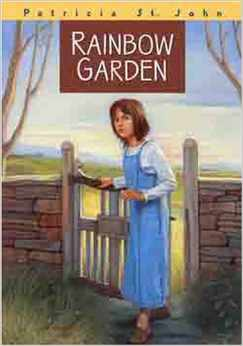
Through Sonlight we discovered author Patricia St. John, one of the most prolific Christian children's writers from the twentieth century. We have 4 more of her books on order, shown below. A wonderful storyteller, Patricia leads children to the Lord and deepens their commitment to bringing glory to God, through honoring Him with their lives. Her books weren't available in our library, so I decided to buy used copies to bless my girls too. Peter's the one who requested more from this author.


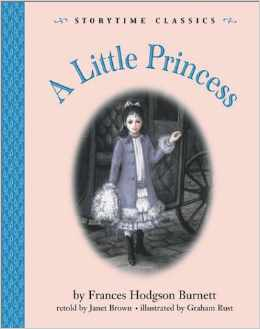
While we wait for these books, Peter will start the Frances Hodgson Burnett classic, Little Lord Fauntleroy. Burnett also wrote The Little Princess and The Secret Garden.


Grade Level 6.4, Lexile 1070
Overview: "Little Lord Fauntleroy" is the story of Cedric Errol who is living in poverty with his mother in New York. When his father, an Englishman who was disinherited for marrying an American, dies, Cedric is summoned to England by his grandfather. Cedric's grandfather, an Earl, intends to transform Cedric into a lord so that he may one day take his place as the lord of the manner. However, it is Cedric who transforms his grandfather with his kind-heartedness and helps to bring his estranged mother finally together with grandfather.


Preschool and First Grade News:

The girls are enjoying:


A Little Princess Rewritten for young children (labeled for preschoolers), my girls have asked for this every day for a week.


Alice's Adventures in Wonderland: A Classic Illustrated Edition: This one, being long, will take us some time to finish, but the illustrations are beautiful.


After lunch, we read a little of this, which will also take some time to finish:


Hitty is a doll of great charm and character. It is indeed a privilege to publish her memoirs, which, besides being full of the most thrilling adventures on land and sea, also reveal her delightful personality. One glance at her portrait will show that she is no ordinary doll. Hitty, or Mehitable as she was really named, was made in the early 1800s for Phoebe Preble, a little girl from Maine. Young Phoebe was very proud of her beautiful doll and took her everywhere, even on a long sailing trip in a whaler. This is the story of Hitty's years with Phoebe, and the many that follow in the life of a well-loved doll.


Our yard is full of mud, and my lovely, mud-caked children are on their way inside, so I must close for today to minimize the mess. Have a wonderful weekend!

Zephaniah 3:17 The LORD your God is in your midst, a mighty one who will save; he will rejoice over you with gladness; he will quiet you by his love; he will exult over you with loud singing.